 OPENRATIO
Menu
RATIO
Clearer neurological data, wherever care happens.
Open standards and measurement tools that help clinicians and researchers compare, track and understand neurological signals.
Why OpenRatio
Neurology runs on ratios. The rhythm of brain activity, the flow of blood, the steadiness of a hand: each is a measure clinicians read to make decisions.
The ratio that matters most is out of balance. Billions of people live with neurological conditions, yet the specialists, tools and data they depend on are concentrated in a few places. Across stroke, epilepsy, essential tremor and Parkinson's disease, the same three problems recur: diagnosis comes late, specialists are overstretched, and data sits in systems that cannot talk to each other.
OpenRatio exists to restore that balance, and the name is the method.
Open
Shared standards, shared tools and transparent AI that connect regions, hospitals and researchers.
Ratio
Complex neurological data turned into clear, consistent measures that help clinicians reach better-informed decisions sooner, wherever they work.
The evidence
Ten things the numbers tell us.
Six about health, four about the economy. Every figure is sourced.
Health
01 · Scale
The leading cause of ill health and disability worldwide.
02 · Inequity
It falls hardest where care is thinnest.
03 · Women
It weighs most heavily on women, who are least represented in the research.
04 · Readiness
The systems to respond are largely missing.
05 · Opportunity
Much of it can be changed.
06 · Trajectory
It is growing fast, as populations age.
Economy
07 · Counted
What health systems pay is already vast.
08 · Uncounted
Most of the cost never reaches a hospital bill.
09 · Carers
Women carry much of that hidden cost, and closing the gap pays.
10 · Direction
The bill is compounding.
Focus areas
One shared data foundation, many conditions.
NeuroLex
Neurological conditions differ clinically, but their data is built from a small set of shared parts. NeuroLex standardizes each part once, so every condition that uses it inherits the work. It builds on established standards, including BIDS, HED, SCORE, EDF+, OMOP and FHIR, and makes them work together in practice, including with legacy and low-resource data.
Planned scope
Research
Assistive designs for people living with tremor.
Alongside the data work, we study simple, low-cost aids for daily tasks. Each is an engineering concept at an early research stage, documented with calculations, CAD models, drawings and a priced bill of materials. They are not medical devices and are not available for use.
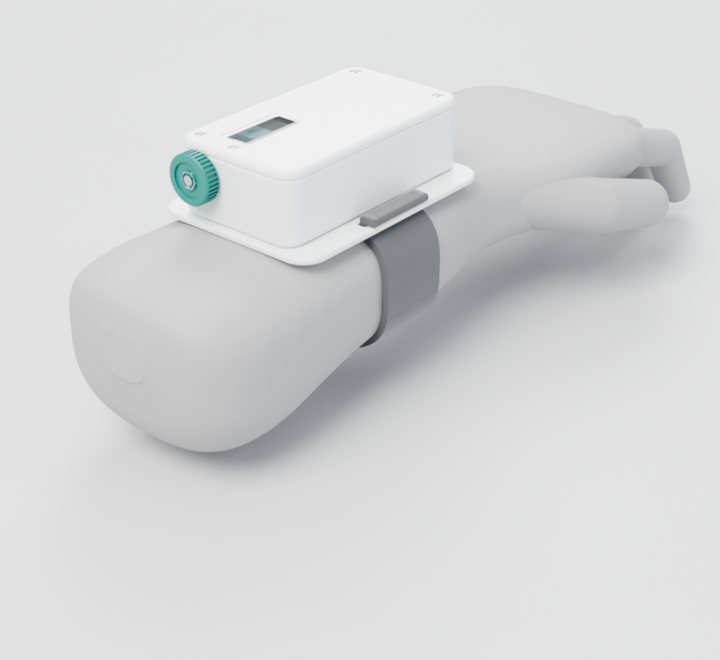 StillBandConcept · TRL 3A battery-free bracelet concept that uses a small tuned mass damper to study whether wrist and forearm tremor can be damped passively, with no electronics or charging.
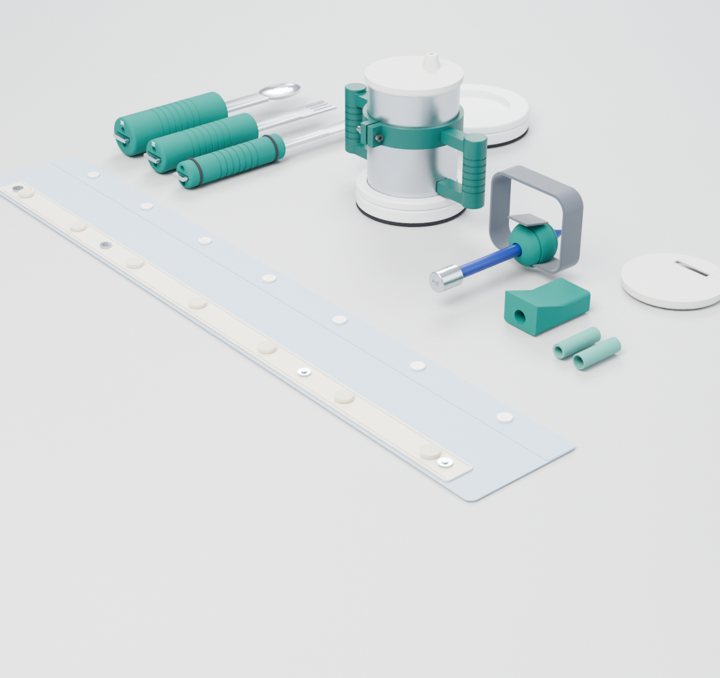 SteadyKitConcept · TRL 3Four simple, non-electronic aids for meals, writing and dressing, designed to adapt objects a person already owns and to be made by volunteers.
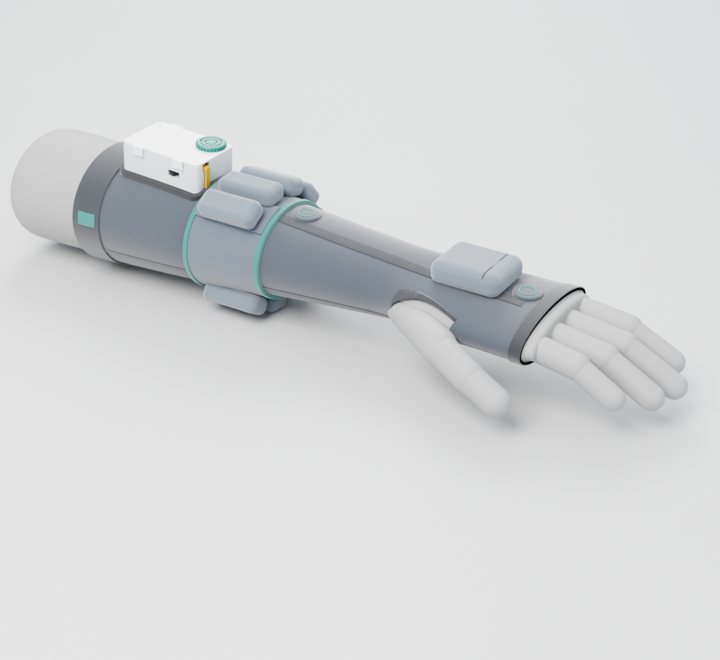 SteadySleeveConcept · TRL 3A fingerless forearm sleeve concept for studying compression, light weighting and vibration separately, with an optional motion sensor to record tremor for review.
Principles
How we work
With clinicians
- Tools that work with neurologists, organizing and quantifying data so they can spend more time with patients.
- Refined with real-world input from neurologists, patients and technologists.
- Tested rigorously with clinical partners, because consistency matters.
One language for data
- NeuroLex lets data from different systems work together, so results stay comparable across sites and regions.
- Scans, sensors and patient histories brought together into one consistent record.
Built for anywhere
- Low-cost devices, offline use and simple interfaces, so tools can work in any clinic.
- Stable on a high-connectivity urban network or offline in a rural setting.
- Extending specialist reach where it is scarcest, and accelerating research where systems are advanced.
Responsible by design
- Rigorous testing, bias checks and safeguards against misuse at every release.
- Research tools and standards shared openly; models released only after appropriate review.
- No claims about time saved, reach or outcomes until documented studies with partners support them.
Who we are
We are builders, technologists, product designers, operators, patients, doctors and scientists united by a shared belief:
Neurological care should be timely, accessible and data-driven, no matter where you live.
Our diverse perspectives give us the empathy to see the patient's journey, the skill to design useful tools, and the determination to bring them into everyday clinical practice.
Founding team
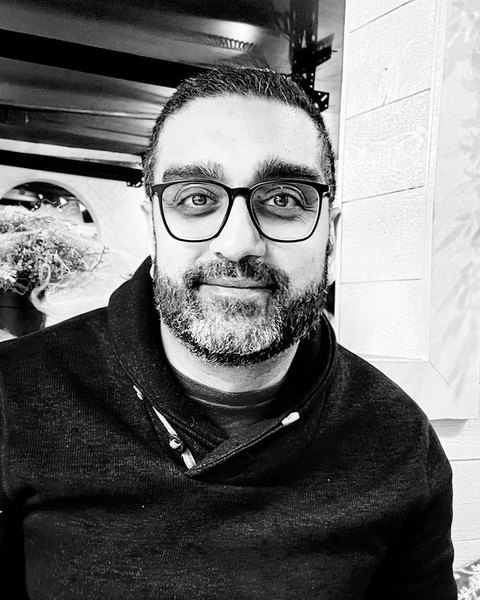
Amish is an engineering technologist who has spent his career getting disconnected systems to work as one, in factories, power networks and critical infrastructure. He has led technology teams at Fortune 500 and global engineering companies and is a recognized speaker on emerging technology. He is a leader at Helpful Engineering, a global open engineering nonprofit, serves on the national board of the Association for Manufacturing Excellence, sits on the IEEE standards working group, and takes on technical projects with industry. He has watched family and friends live with neurological conditions, and noticed something he could not unsee: a factory often knows more about the health of its machines than a clinic can know about a patient's tremor between visits. OpenRatio is his attempt to close that gap.

Dr. Geeti is a physician and clinical neurophysiologist who spent 46 years in public health service with the Ministry of Health in Kuwait, with particular depth in stroke and multiple sclerosis. Her research and work on stroke earned her a lifetime service award from the Ministry. During her career, MS in Kuwait rose from 9.5 people per 100,000 to about 78, more than double today's global average and the Eastern Mediterranean rate, and new cases nearly quadrupled between the late 1980s and the late 1990s. Stroke carried an equally unusual load: in one Kuwait study, 69% of people with ischemic stroke also had diabetes, the highest share reported in the Middle East. She cared for people with stroke and MS at national scale as both conditions climbed. That experience gives OpenRatio clinical insight that carries across the Gulf and the wider Middle East and North Africa: which measures matter, and how each tool fits into a neurologist's day.
Join us
We are looking for:
- AI and ML engineers
- Neurologists and EEG specialists
- Data standardization experts
- Privacy and ethics researchers
- Health policy advocates